My Academic Career
I had an inkling when I was still at school that I wanted to be an engineer, specifically to build roads and bridges and stuff, although you would never have thought so from my matric results: my best result was a C for English! So having worked for two years after school, in 1968, I enrolled in the Dept of Civil Engineering at The University of Cape Town (UCT). I sailed through without failing a single subject and in my final year I won the prize for the best final year project (thesis). On the strength of that the Dept offered me a Junior Lecturership to complete my Masters. I ended up spending fourteen years in academia, mostly at UCT.
A junior lectureship is simply a glorified bursary during which you are supposed to tutor undergraduates and give the odd lecture. I can still vividly remember my first lecture to 165 second year engineering students and how by the end of the lecture I really was enjoying it! For my Masters I specialised in structural analysis and specifically engineering software development.

BSc graduation in 1971

MSc graduation in 1974

BSc certificate

MSc certificate
Luckily for me I did my Masters in a subject called Finite Element Stress Analysis, which was just taking off and which was to become hugely important in structural analysis. So much so that 18 months later I literally walked into a job in London at a large engineering computer bureau called Service in Informatics & Analysis (SIA)). This was a fabulous job where I did structural analyses for several major companies (British Aerospace, Leyland, etc.), lectured at the European Space Agency, and contributed to the development of a major engineering software package called FEMALE (Finite Element Modelling and Analysis Language for Engineers).

FEMALE Technical Paper
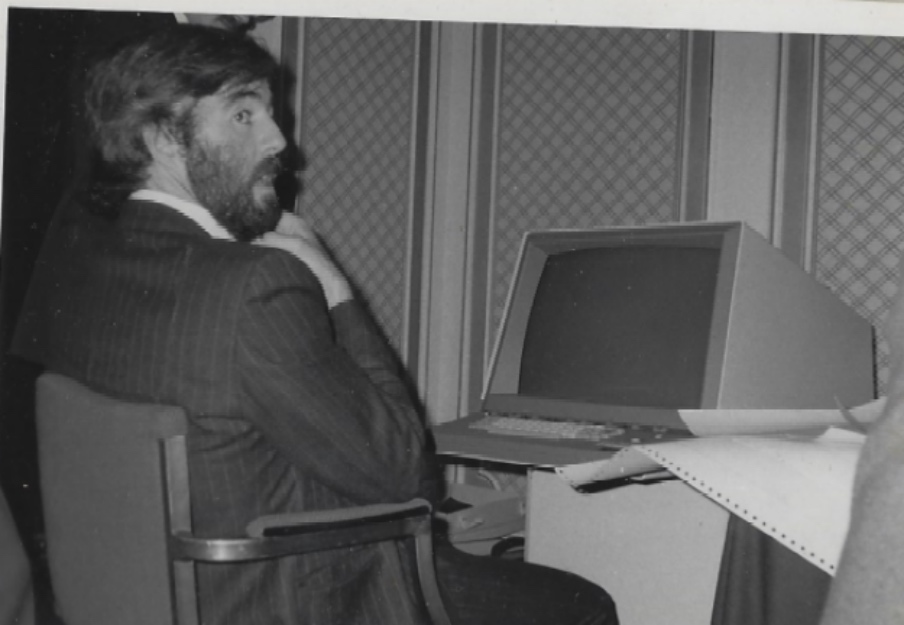
Demonstating FEMALE at a conference
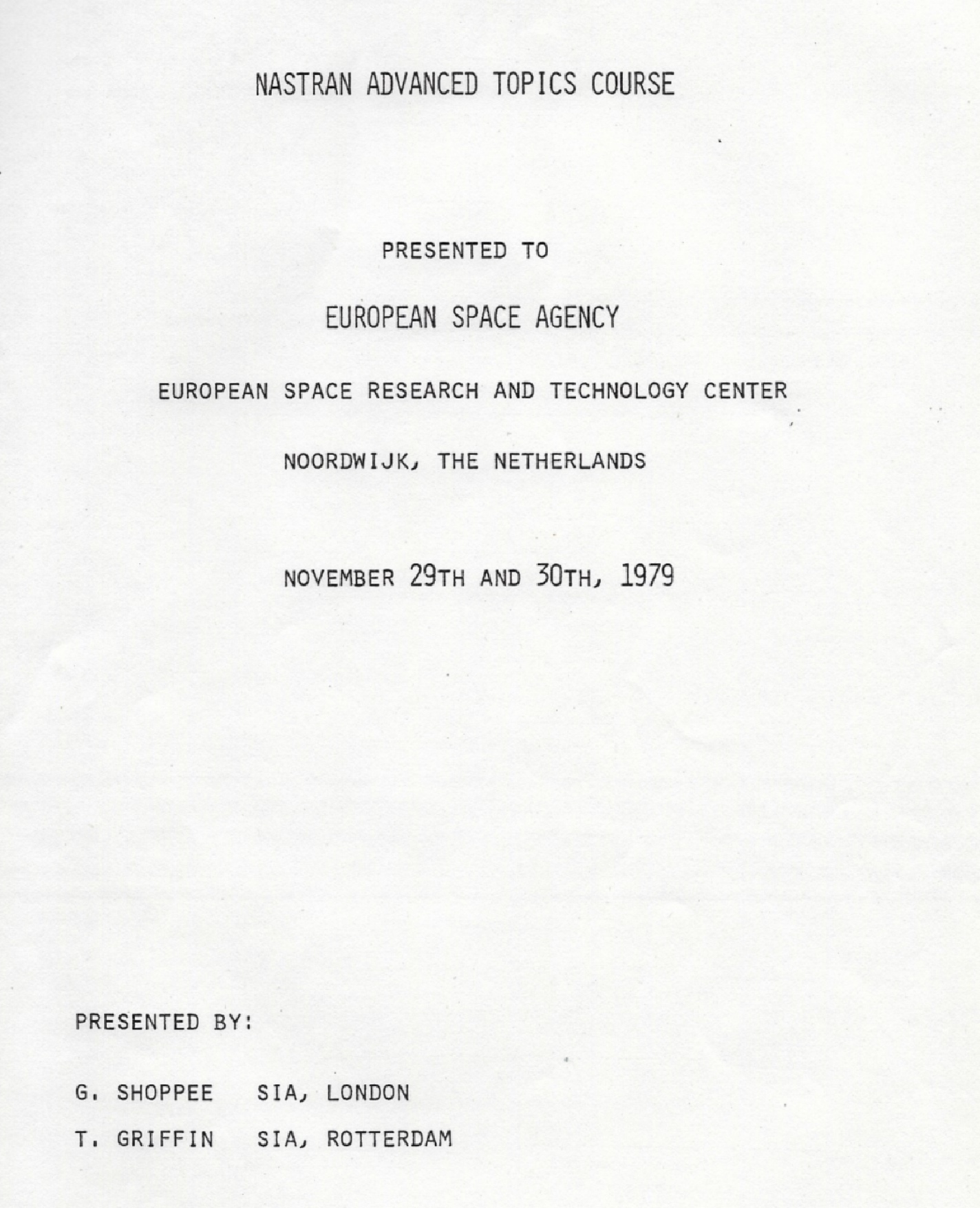
European Space Agency Course
In 1980, after four years working in London and Rotterdam, I accepted an invitation to return to UCT as a senior lecturer in Civil Engineering. I'd had enough of Europe and I really enjoyed research and academic life so looked forward to completing my PhD. But for now I had serious teaching duties at both undergraduate and graduate level and it took me a while to settle in. This was largely because the Applied Mechanics Research Unit that I was part of undertook a number of industrial projects, chief among them the dynamic earthquake analysis of the Koeberg nuclear power staion. The fees earned from these projects allowed me to buy my first house!
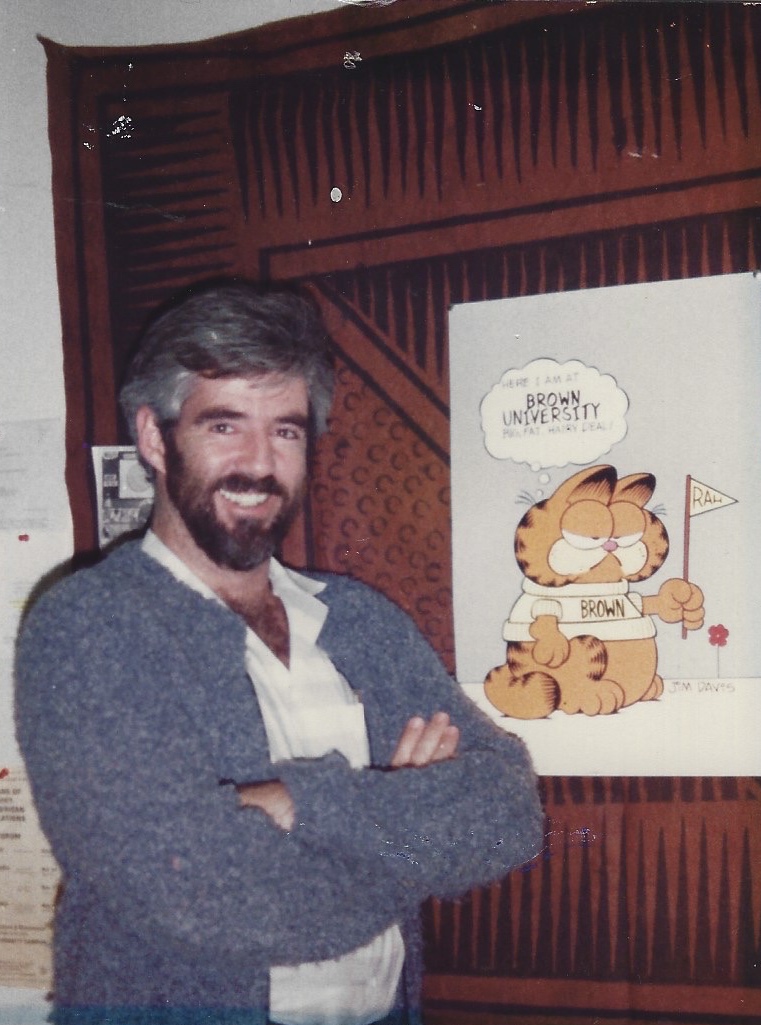
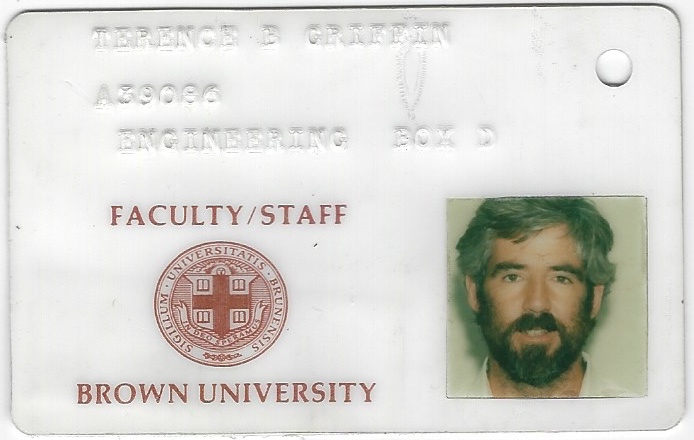
Then in 1983 an opportunity arose for me to spend six months at Brown University in Providence, Rhode Island. This was thanks to the head of Civil Engineering, John Martin, who had recently returned to UCT after being Chairman of Engineering at Brown University (and who had invited me back to UCT a few years earlier). On the way to the USA I was to present a paper at the international conference Plasticity Today in Udine, Italy. Thus did I find myself spending a delightful week in north-east Italy and a day each in Venice and Rome before flying to London. Here I visited old friends and went on to Swansea where my brother Paul had a research post at the University of Swansea.
I arrived in Providence at the end of June 1983, but since Brown University was on summer vacation I decided to go to Hawaii and do a bit of windsurfing. On the way back I visited friends in Los Angeles for a few days. Back at Brown I was seconded to Professor Symmonds and helped him with a number of research projects, mainly on the computing side. I also attended lectures. One of the highlights of being at Brown was that it gave me the opportunity to visit professors at other nearby universities, including MIT, Havard and Yale. Towards the end of my stay I went to the West Coast and visited Stanford near San Fransisco and UCLA in Los Angeles.
In February 1984 I resumed teaching at UCT and got stuck into my PhD with a vengeance. I had two supervisors: Professor John Martin (for engineering input) and Professor Daya Reddy, head of Applied Maths (for applied maths input). In fact, my PhD turned out to be more applied maths than engineering as the following selection of papers published in international journals show:
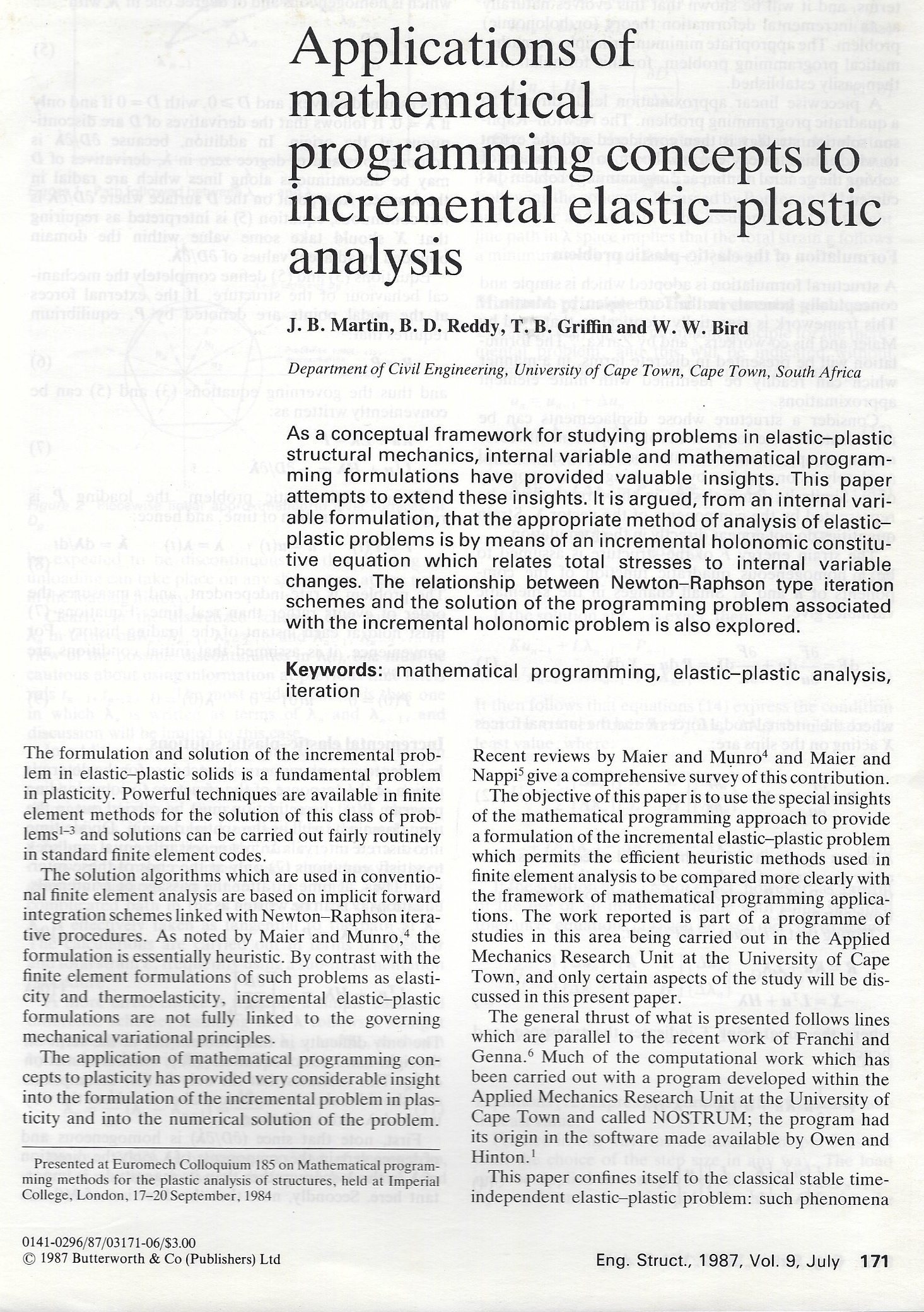
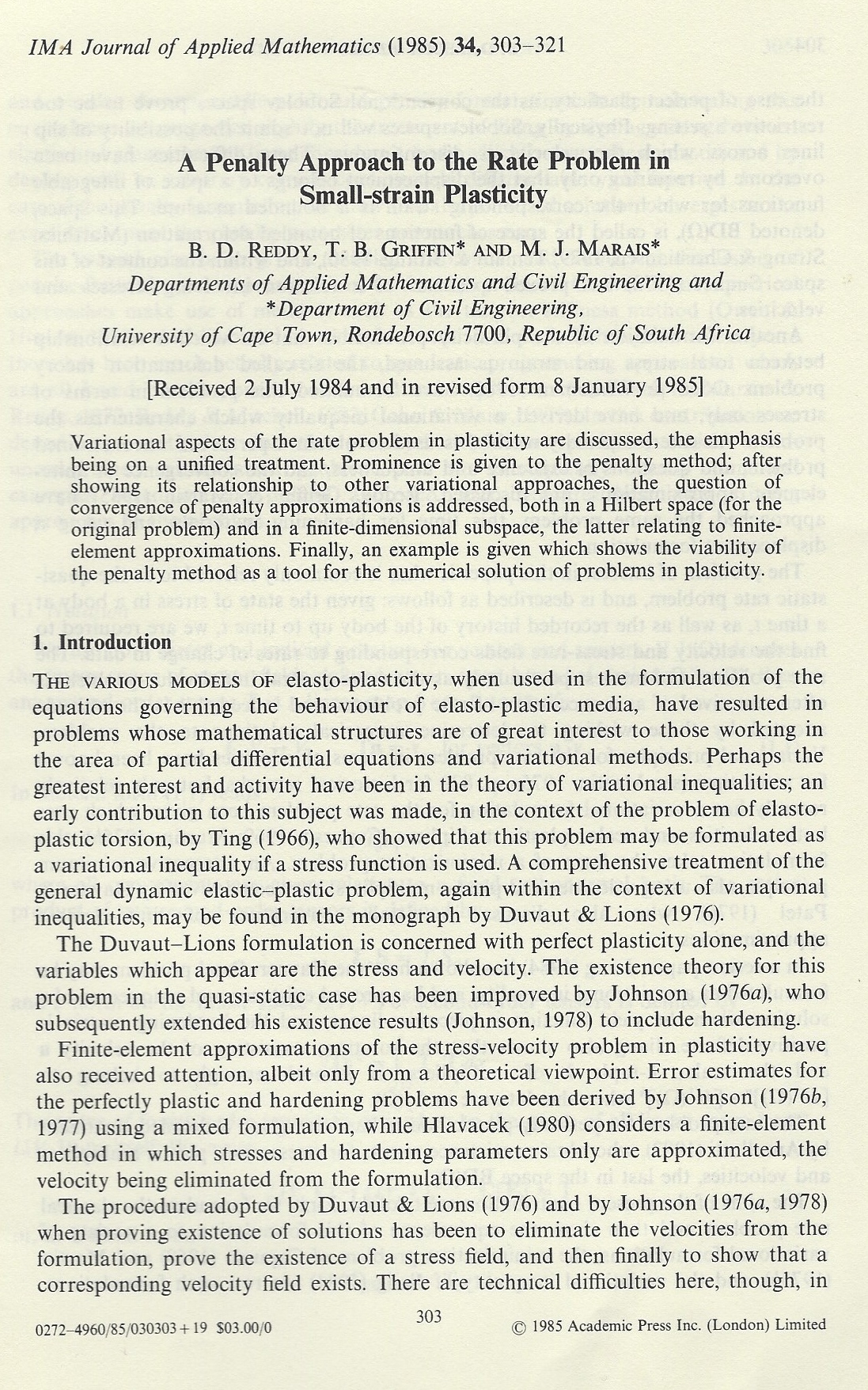
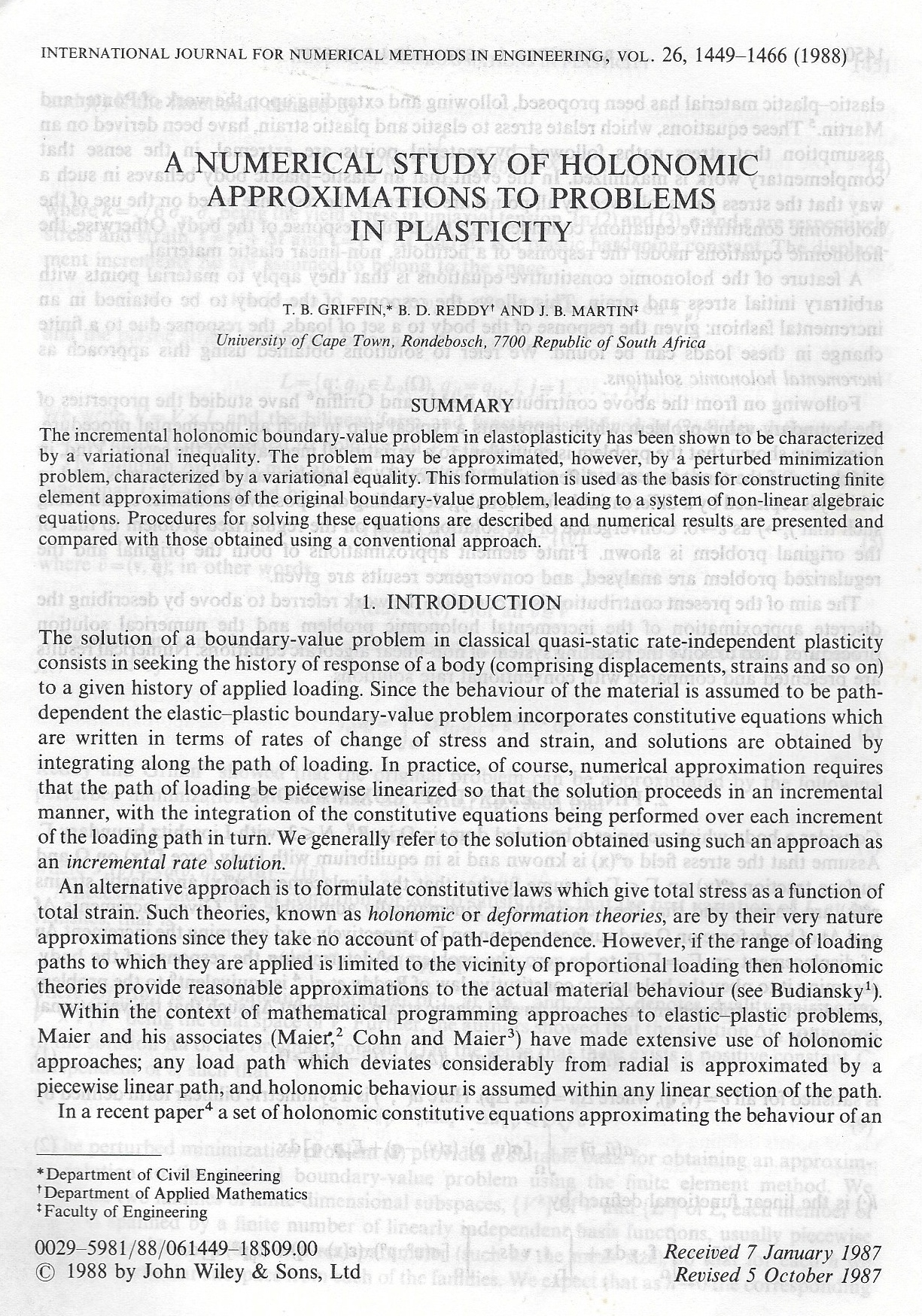

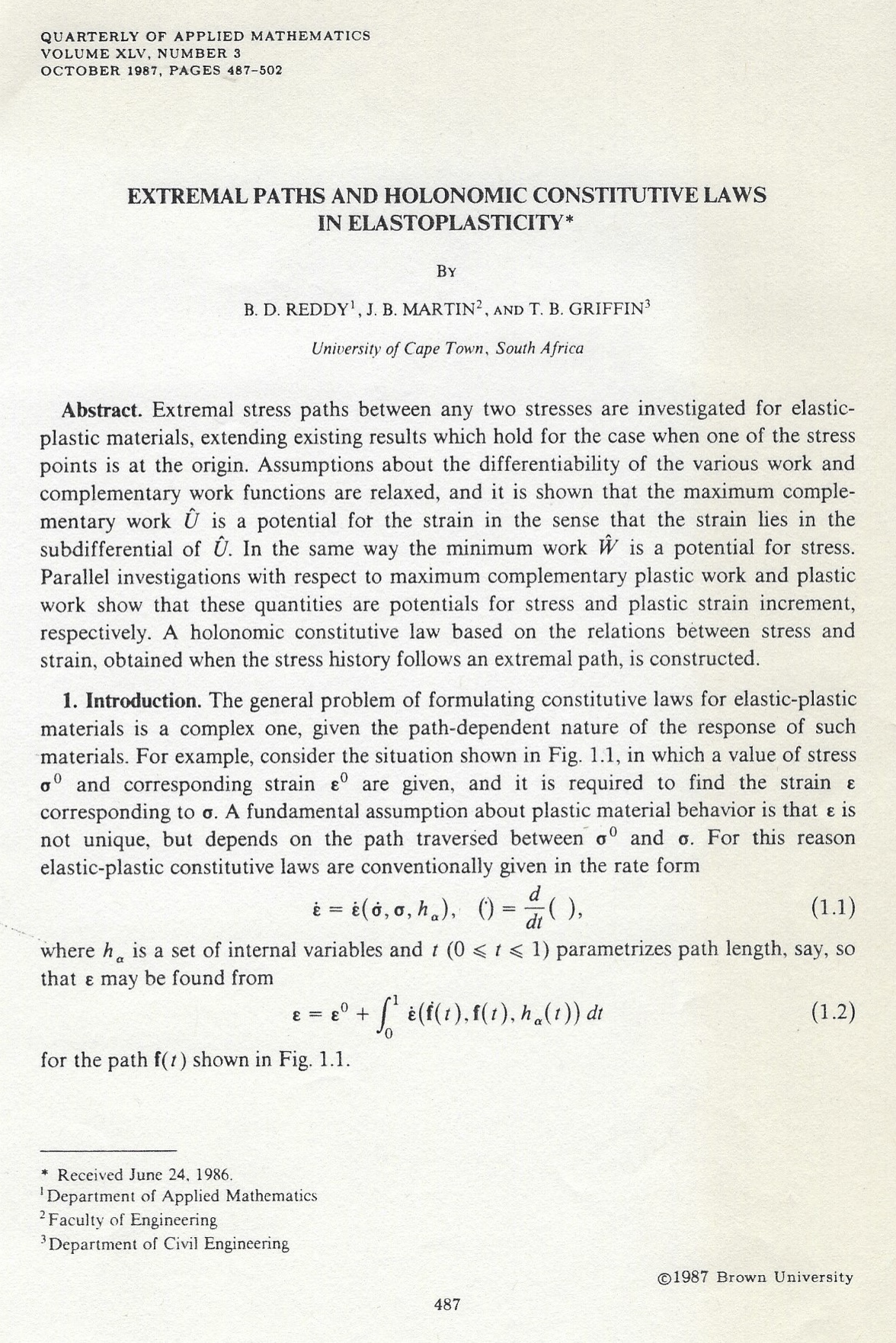

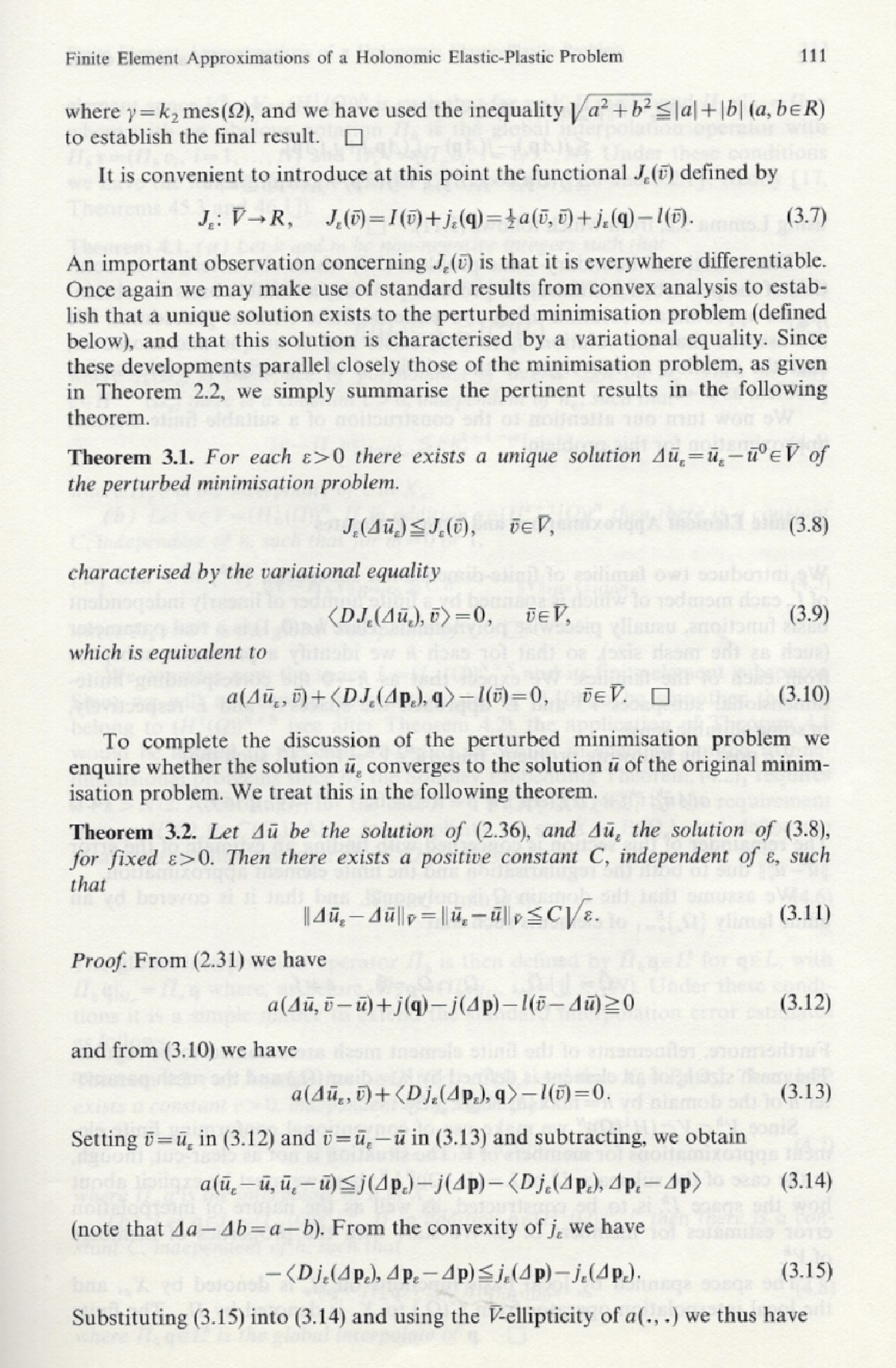
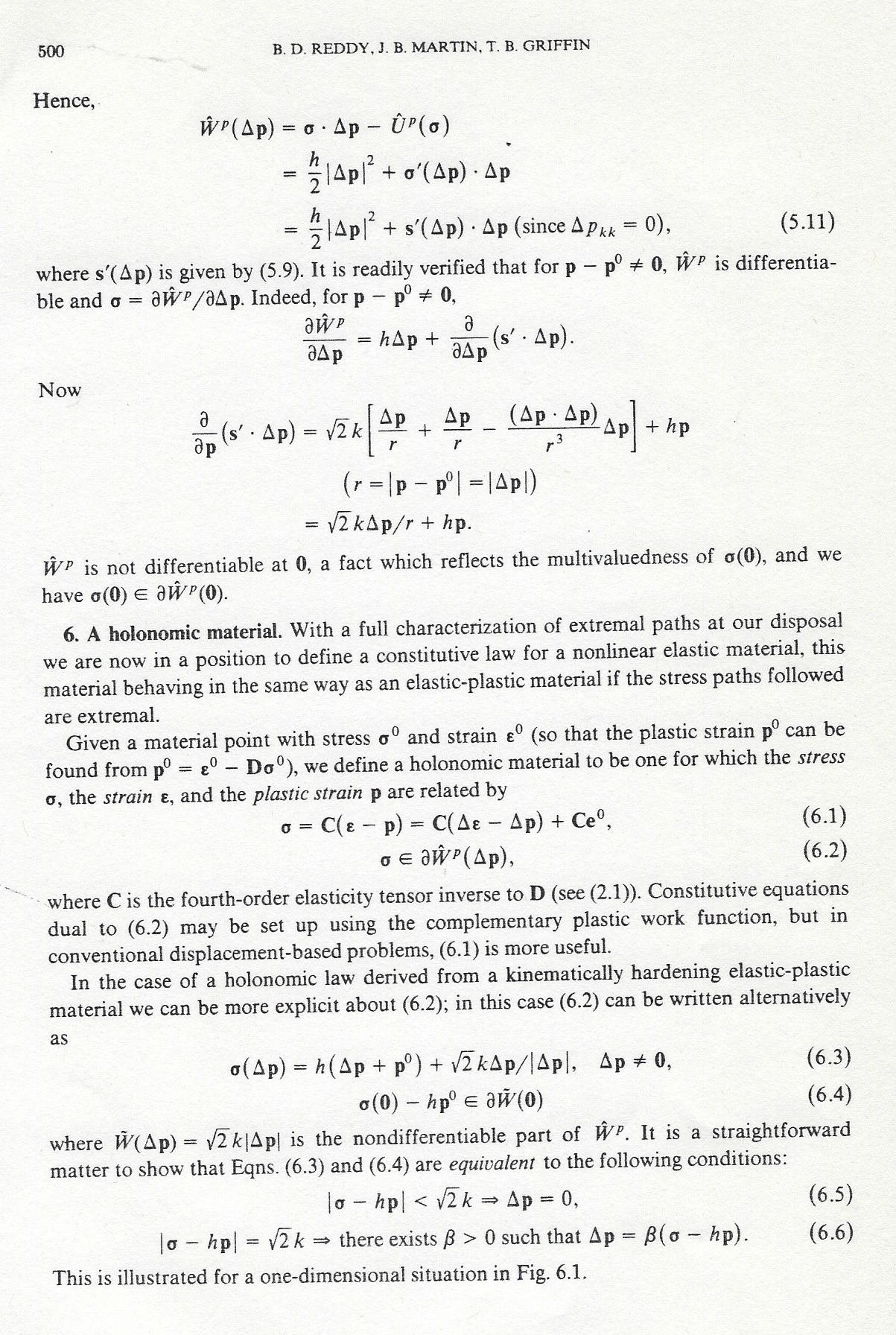
After a hectic two years at the grindstone I submitted my thesis in April 1986. I had three overseas external supervisors: Professor Guilio Maier from the Politecnico di Milano, professor JT Oden from the University of Texas at Austin, and professor ARS Ponter from the University of Leicester. Fortunately only one of them, Guilio Maier, examined me in person! When he did so (he was visiting UCT at the time) he said: "Terry, I don't understand your thesis so let's forget the exam and go and have a cup of tea!". I subsequently graduated in December 1986.
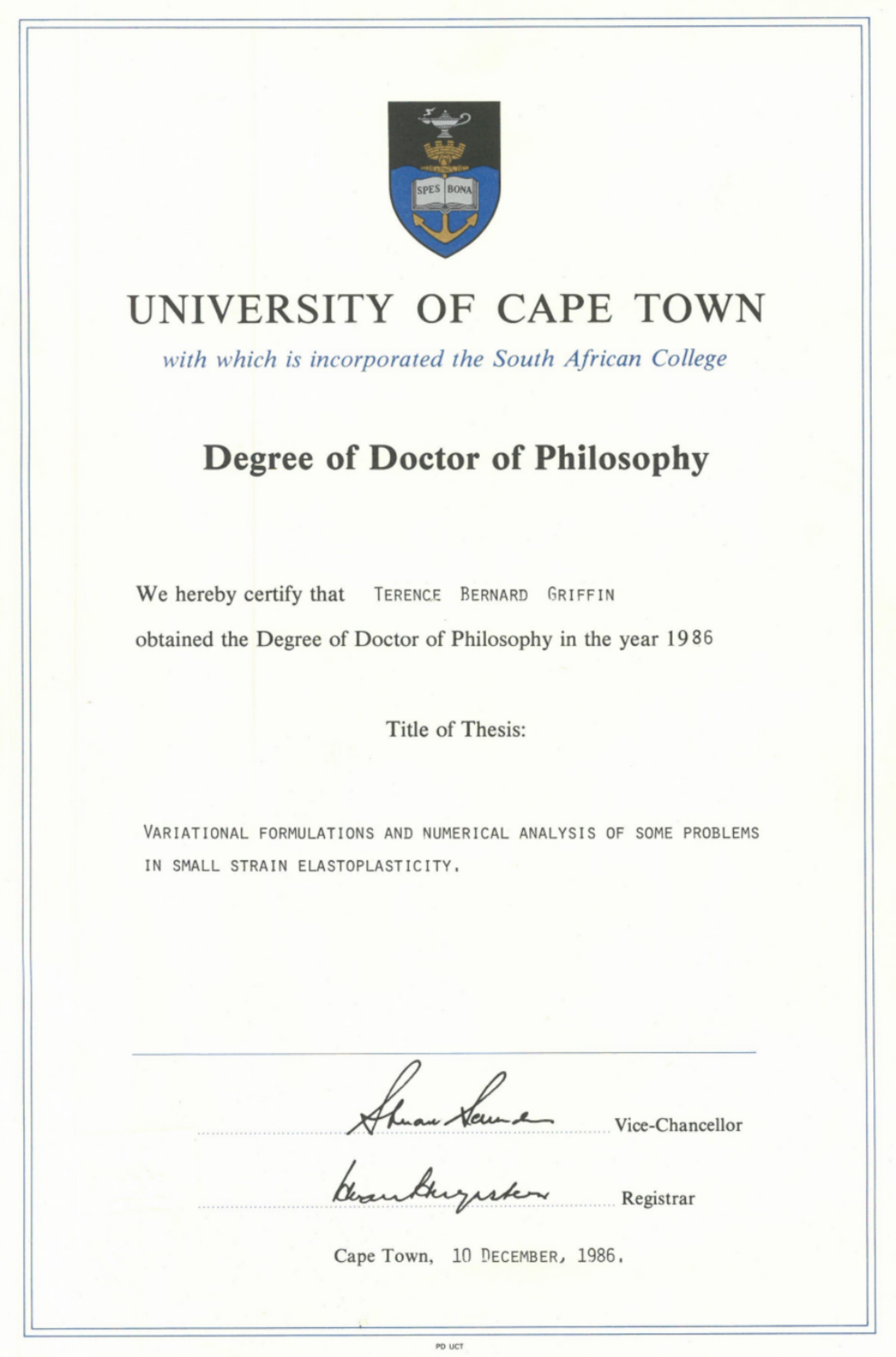
PhD certificate
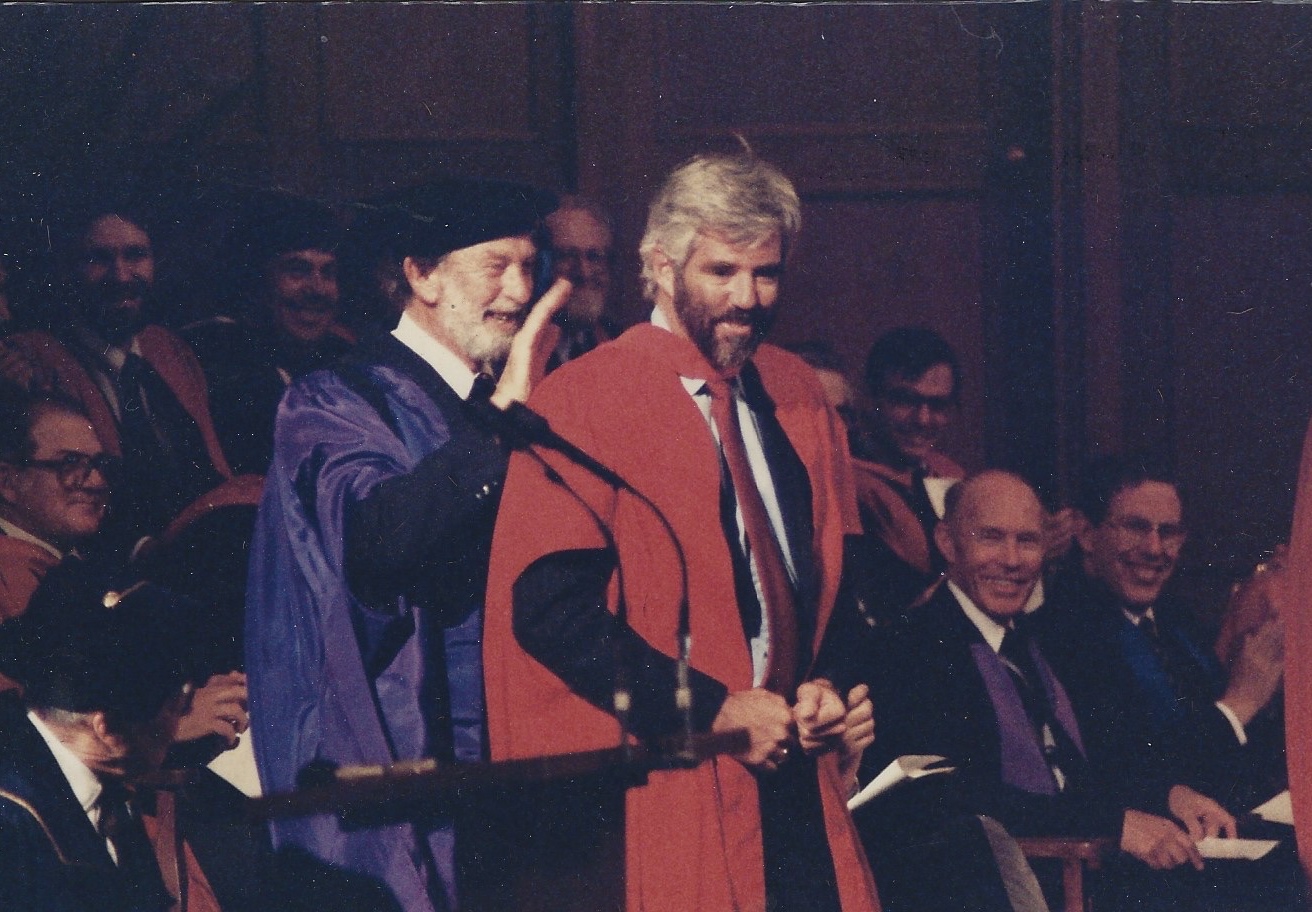
PhD Graduation in 1986
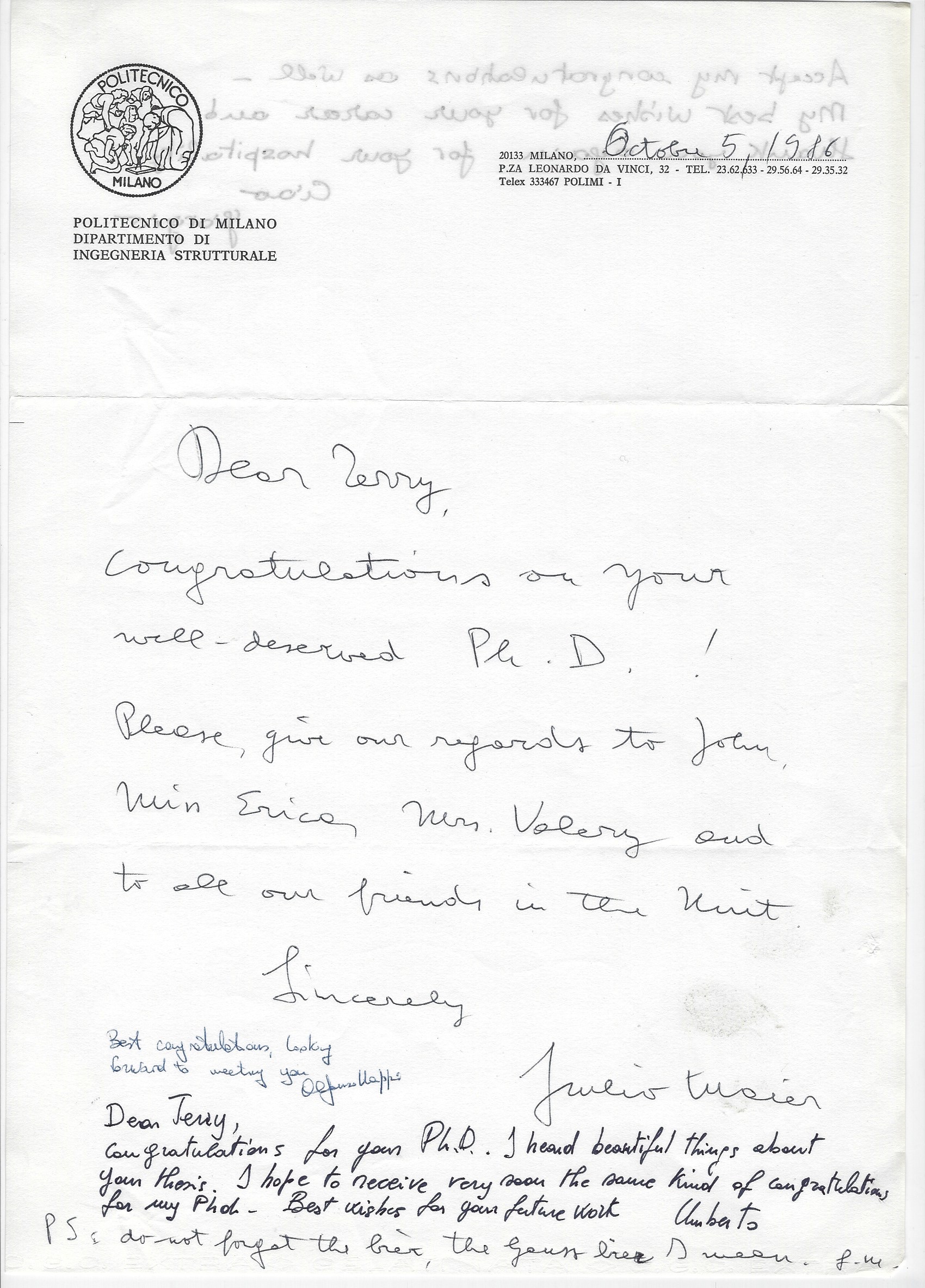
Interestingly, a week before I graduated I was registered as a Professional Engineer, possibly on the stregth of my vast academic output (see below). Although I was something of an expert stress analyst I had never been on a building site nor even designed a structure, so whether it was truly deserved or not remain moot.
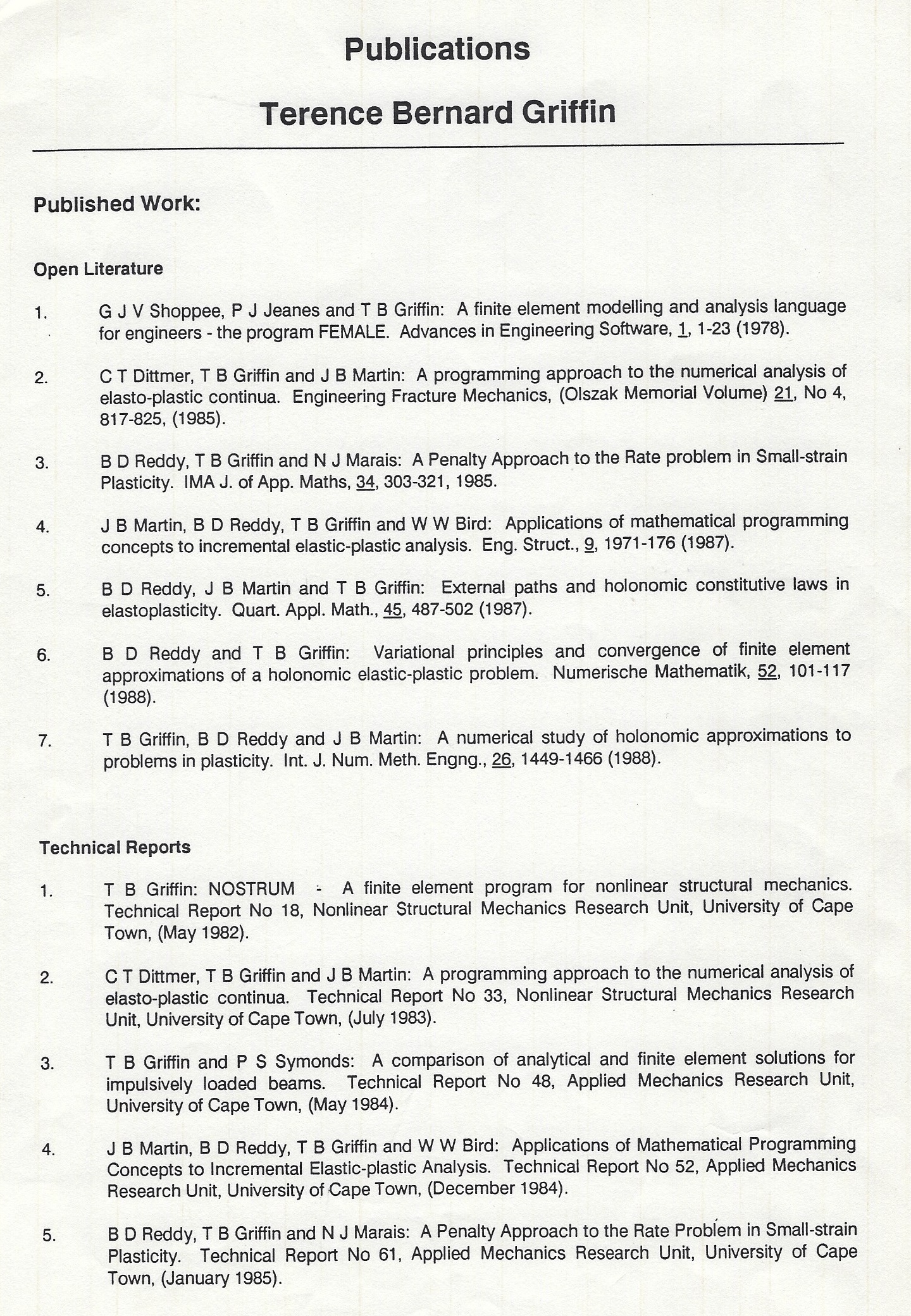


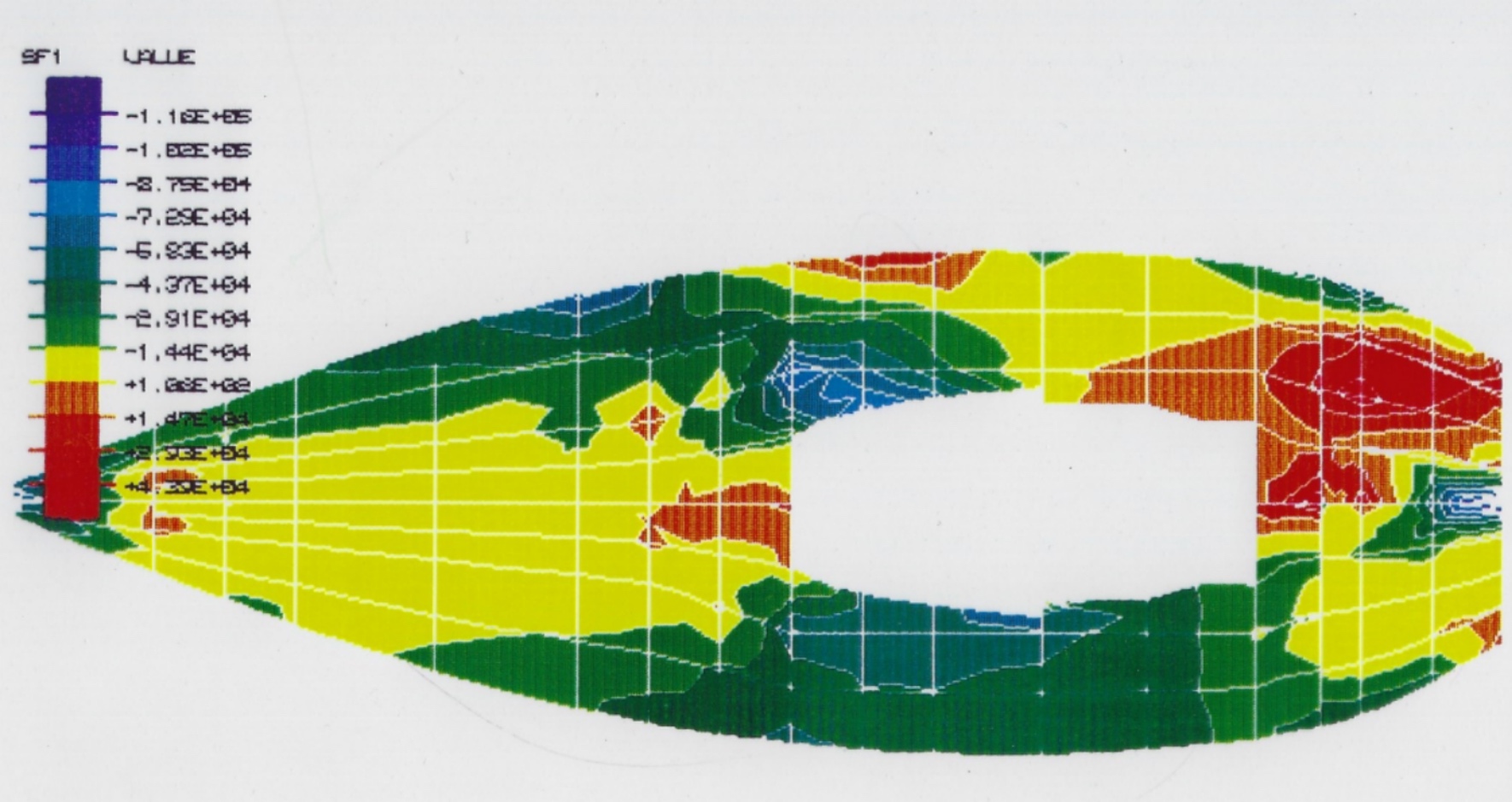
I spent most of 1986 and 1987 writing the papers that are shown above. I left UCT at the end of 1987 to manage a new company called Finite Element Analysis Services (FEAS) which was an offshoot of the Applied Mechanics Research Unit at UCT and which held the ABAQUS agency for South Africa. It was during this period that I lead the stress analysis of the yacht "Allied Bank" which to my eternal embarressment subsequently sank in the Southern Ocean when it struck an iceberg.
In 1990 I was offered an Associate position at Liebenberg & Stander (L&S), Civil & Structural Engineers, in Cape Town, running their computational mechanics department. Not a lot of people know this but the Maritime Division at L&S, including me, were engaged in designing a submarine for the SA Navy; there was even a mock-up of the conning tower in the basement of the building.
Alas, with the coming of the new South Africa in the early nineties the Maritime Division was disbanded in February 1993 and the entire staff was retrenched. I was placed on 3-day week and for the second half of the year I taught a Civil Engineering computer course in at UCT on my two free days. I also applied for an associate professorship in Mechnical Engineering at UCT, but was unsuccesful. That was the end of my academic career and, as it happened, my engineering career as well. I resigned from L&S in August 1993 and immediately switched from engineering to IT, specifically software development.