My Ancestry and Childhood

My father’s side of the family is the more interesting. My paternal great-great-grandfather Thomas William Griffin, from Limerick, Ireland, immigrated to Australia with his four sons, arriving in Melbourne in September 1856. They settled in the district of Warrnambool, on the coast just west of Melbourne. Thomas' son Edward Patrick owned land near Warrnambool, apparently to farm. He had nine children, the youngest of which was my grandfather Michael Ignatius Griffin, born in 1874. Michael decided to move on and made his way to Bulawayo, then a fledgling town in Southern Rhodesia, in 1897.
My paternal grandmother, Mary (maiden name Francey), was born in Carrickmacross, Co. Monaghan, Ireland, in 1879. We know almost nothing about her except that she met Michael in Cape Town and that they were married in Bulawayo sometime around the late 1890’s. The newly married couple set up home in Bulawayo and my father was born there in 1919.


My maternal ancestors were easier to establish since they are all Scots. My maternal grandfather was Duncan Asken, born 1884 in Glasgow. He married Elizabeth Boyle in 1908 and they lived in Glasgow, raising four children there. They emigrated to South Africa in 1921 and my grandfather found work on the mines in Pilgrims Rest where my mother was born in 1924.


I have always been disappointed by my grandfather's Australian origin, given that his parents were both Irish immigrants and that he only lived there for his first 24 years. Going back three generations then, I have two Scottish and two Irish ancestors. Although it was comforting to be of Scottish and Irish decent, it didn’t help my siblings and I get Scottish or Irish passports ourselves. There was that irritating Australian connection to overcome!
Back in the 1970s and 1980s South Africans were not particularly welcome in foreign parts and my brother Paul and I were keen to obtain Scottish or Irish passports. However, the key actor in such an endeavour was our paternal grandfather, and we had no desire to be Australian! So we tried the other two avenues: paternal grandmother (Irish) and maternal grandparents (Scottish), but neither proved successful.
My father’s parents divorced two years after he was born and his mother thankfully moved from Bulawayo to Cape Town, where he attended Marists’ Brothers College in Rondebosch. At the start of the Second World War he enlisted with the Cape Town Highlanders but never saw action because of a medical condition which left him deaf in his left ear and which later turned out to be a brain tumour. After the war he became an accountant with an insurance firm for which he worked his entire life.
My mother grew up in Pilgrim’s Rest and attended school at a Catholic convent in Lydenburg. Since her family were not well off, she left school after standard 8 and went to work as a bank clerk in Johannesburg.
So it came to pass that my father and mother met in 1947 when they both found themselves living in the same boarding house in Johannesburg. Six months later they were married, and nine months and eleven days later I arrived: a so-called "honeymoon baby"!

My parents' wedding

My parents partying with their best friends!
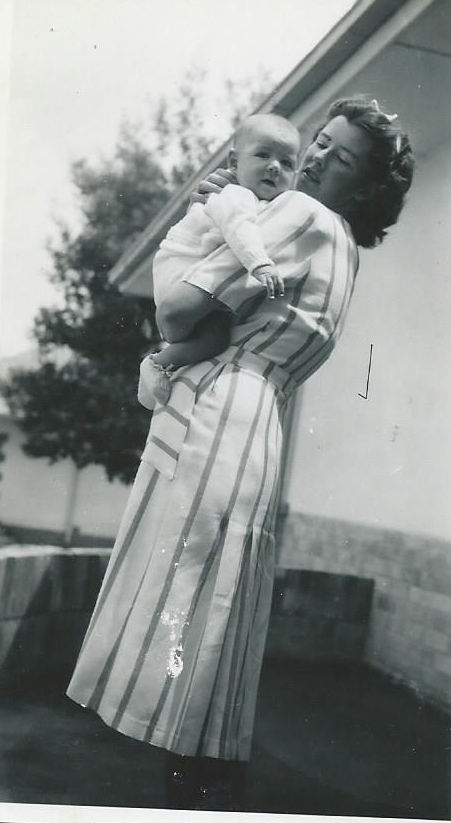
Along came Terence
Although my mother was 23 years old when she had me, her skill at raising children left a great deal to be desired: within my first 18 months or so, she managed to nearly kill me three times. First, she neglected to increase my food intake until, alarmed by my incessant howling, she took me to the clinic where they informed her I was hungry! Then she left me sitting in my bath while she attended to dinner, returning to find me gurgling under water. Finally, I was allowed to wander out the front door down to the nearby main thoroughfare where a bewildered policeman rescued me from being run over. By the way, my mother told me about all three events.
My dad decided that Johannesburg was a dump and, about a year after I was born and encouraged by the fact that his mother lived in Cape Town, decided to join her. He bought a ramshackle bungalow "on the rocks" in Bakoven - 35 Beta Road - and a finer place to raise a family would be hard to find: it was a kid's paradise. The rocks in front of us were alive with crayfish and Big Beach was a few hundred meters away, so fishing, swimming and generally running wild was our way of life.
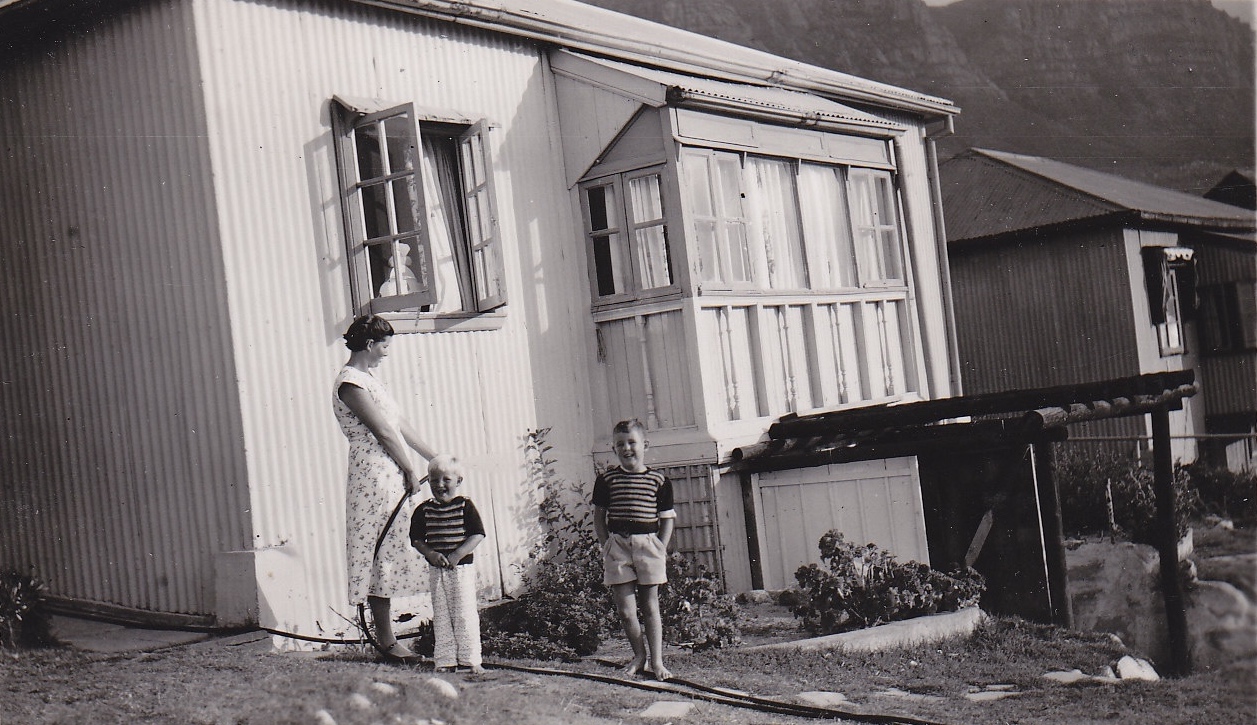

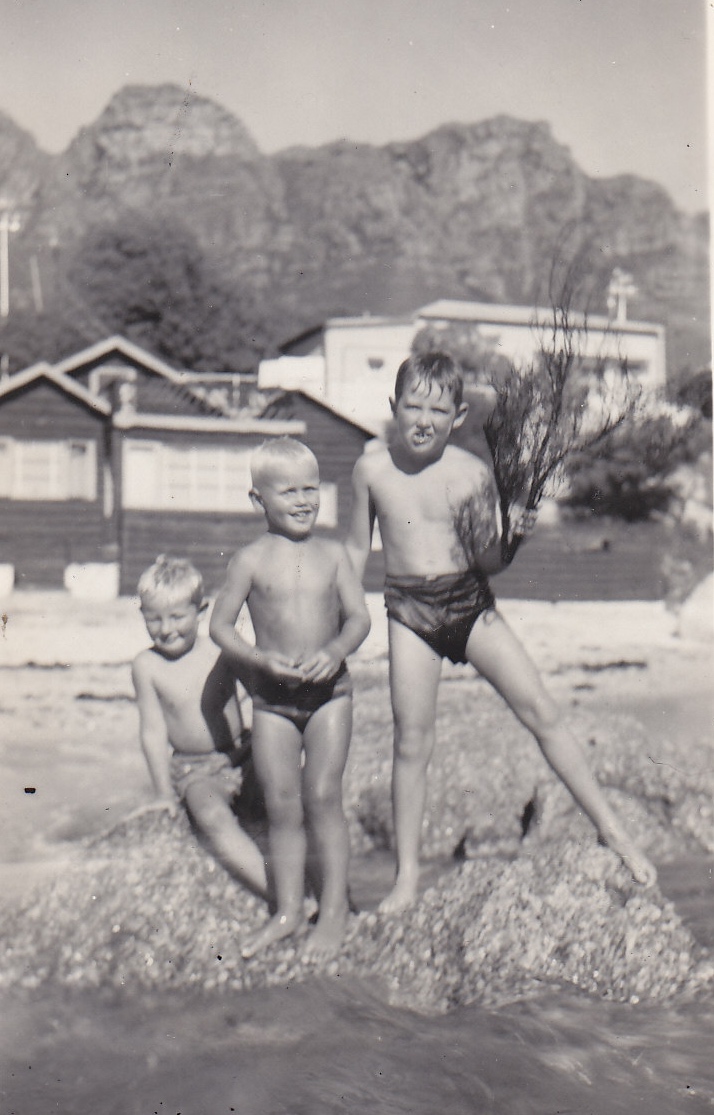
I started school (Camps Bay Primary) when I was five and we were still living in Bakoven. But soon there were more brothers arriving and in 1955 we had to move to a bigger house up the road, 57 Camps Bay Drive, which then remained the family home for the next 30 years.
Having moved to "57", as we called it, life began to expand. We were still close to the sea (and Bakoven, which remained our beach of choice), but the neighbourhood was kneee-deep in other kids. There were scores of us! My first girlfriend was a beauty called Angela Steadman, and I can still remember sitting together in a tree in her back yard promising each other that we would one day get married. I was ten, I think!
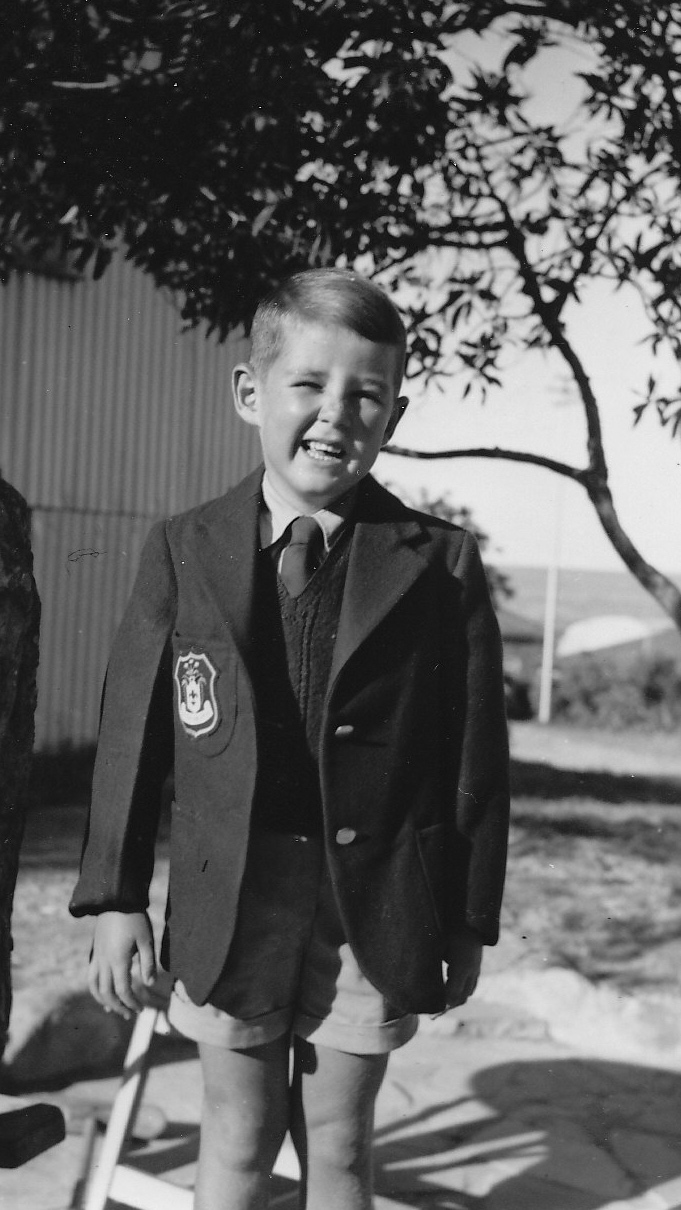
First day of school, January 1954
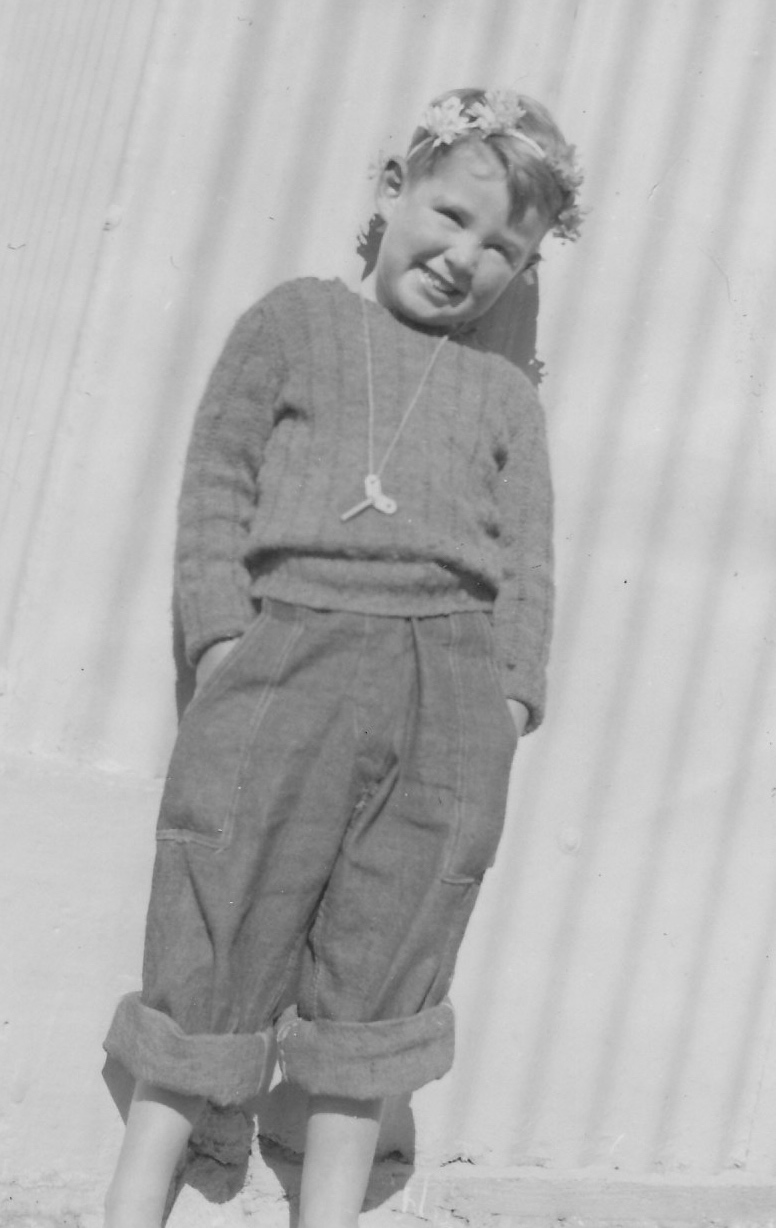
The first Bakoven hippie
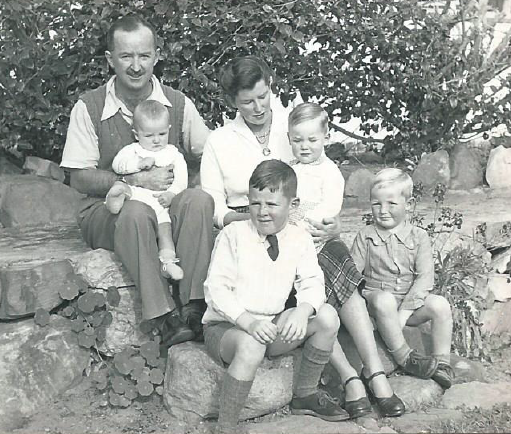
The enlarged family moves to 57 Camps Bay Drive - 1955
In 1959, age 10, I was transferred to Christian Brothers' College (CBC) in Green Point, a long 35 minute bus ride away. Although CBC had a far superior academic reputation compared to Camps Bay High, the real motivation was for me to embrace a good Catholic education. What we also endured was the brutally sadistic attention of the "Christian" brothers. I retreated into the cover of a young saint, joining all the religious clubs I could, thus avoiding the worst of it: I only got "cuts" (with a leather strap) once in all my seven years there, but what I witnessed was often horrific.
I joined the First Clifton Sea Cubs and graduated as a "Leaping Wolf", but the scouting side never appealed to me. My best friend Les Frank (who lived on 4th Beach) and I had a good business catching crayfish and selling them door-to-door. Another good friend, Hugh Lindsay , also from Clifton, then showed me his new guitar and I was hooked. My folks bought me a cheap acoustic and Hugh and I together taught ourselves all the Shadows numbers, and having wangled a cheap electric guitar from my long-suffering Mom, formed a band.
But as a band were were a failure, largely because of our lack of decent gear. The drummer in our band, Terry McGrath, and I were also side drummers in the CBC Pipe Band, where we wore full kilts and were in high demand to play at fetes and other civic events. It was also around this time that I was attending the monthly Youth Club Social, where I would sometimes sit the entire night just watching and marvelling at the live band. I even had the nerve one night to ask the lead guitarist if I could play a tune!
In December 1963 the Endless Summer film crew arrived on Glen Beach and, although there were several local surfers in attendance I was not yet one of them. So I said to myself: I have to try this, and a few weeks later I borrowed a board and began my brief surfing career. For at least another year Donald Paarman and myself had to borrow boards to keep surfing. My surfing career is documented here
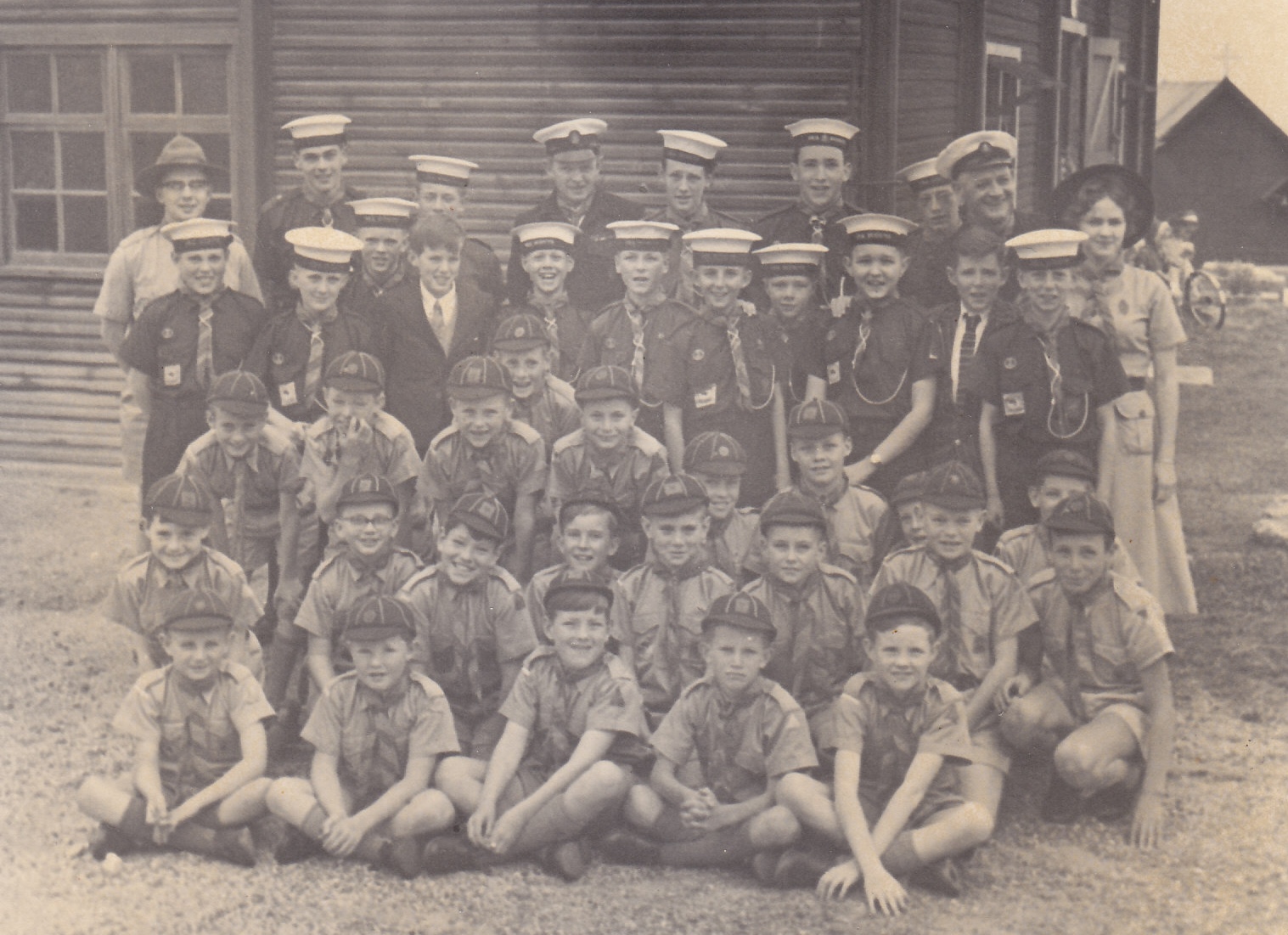
First Clifton Sea Scouts - 1960

My first band: Hugh Lindsay, me, Terry McGrath, Paddy Royles - Oct 1963
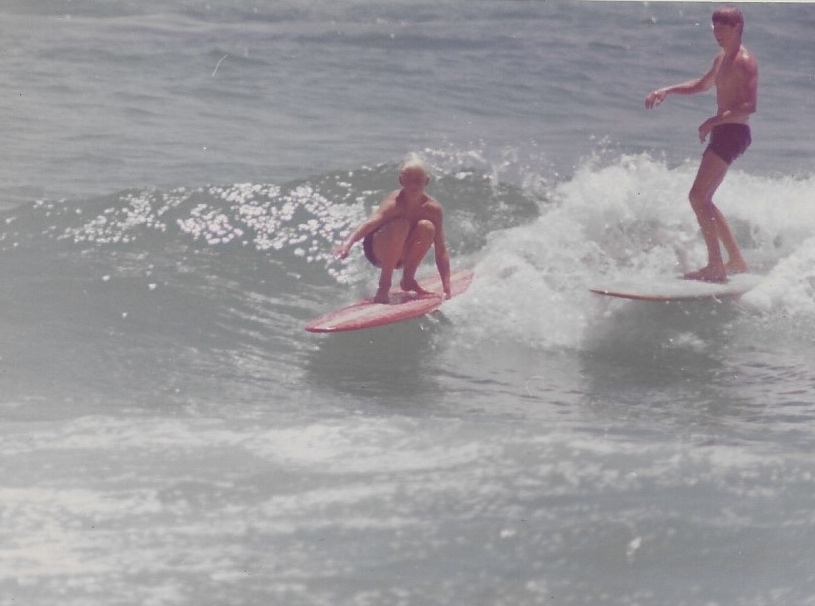
Donald Paarman and me surfing Clifton 1st Beach, December 1965
By my matric year, 1965, I was getting too busy. Apart from surfing I had also discovered girls (or rather, having had my teeth straightened, they were discovering me). It got so hectic that I actually failed my matric trials in June, having got first class passes all the way to Std 9! Panic stations!
Then one day on the bus home from school, around April 1965, Shane Ashcroft, the lead guitarist that I had begged to let me have a go years earlier at Youth Club, asked me if I was still interested. Is the Pope a Catholic? He taught me all the band's songs, and soon I was playing in the band at Youth Club, as well as at various matric dances (except my own!).
At the end of my matric year, just when I thought a career in music was waiting, the band broke up. Never mind, I thought, I'll gather some mates and we'll take over the Youth Club gig. Which we did! Hugh on lead guitar, me on rythme, Eric Ray on drums, Alan Peachey on bass, and fronting us all, Peter Piccolo on vocals. We did a few gigs but we were too wild for Youth Club, especially since Peter had a habit of passing out pissed during the gig! So they fired us and that was the end of my life in a band. Having said that, my music progressed in other more fruitful ways.
In the matric photo below the guy in the top row, third from left, Brendan Dalton, was my best friend. He lived just up the road from me in Camps Bay.
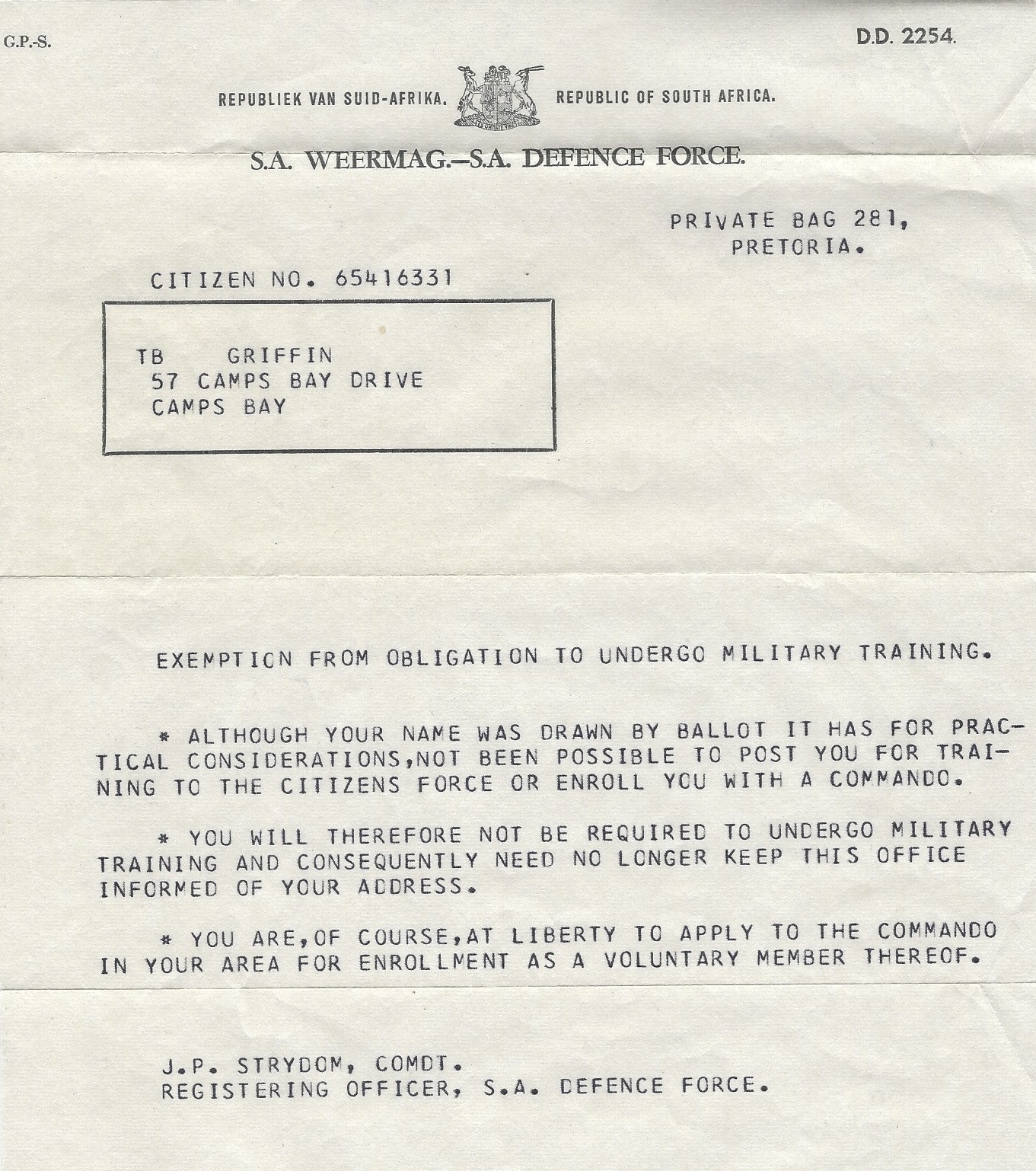
My matric year was a hoot, although I didn't do too well in my exams, but the best news I got that year was exemption from the dreaded military. Instead I went and did something even more gruelling: working on the diamond barges in South West Africa (Namibia)!